


How to reduce the weight of metal welding parts without sacrificing rigidity through lightweight design?
Release Time : 2026-02-19
In modern automotive manufacturing plants, automated equipment such as welding robots, handling arms, and conveyor positioning fixtures operate at high speeds and precision, and their internal components extensively utilize metal welded structural parts as supporting frames, connecting brackets, or motion platforms. These components must withstand repeated loads and vibrations while possessing high rigidity and dimensional stability. However, excessively heavy structures increase motor load, reduce response speed, and exacerbate energy consumption. Scientifically lightweighting the metal welding parts inside automotive automated equipment, while ensuring rigidity and reliability, has become a key path to improving overall machine performance and energy efficiency.
1. Topology Optimization Design Based on Working Condition Simulation
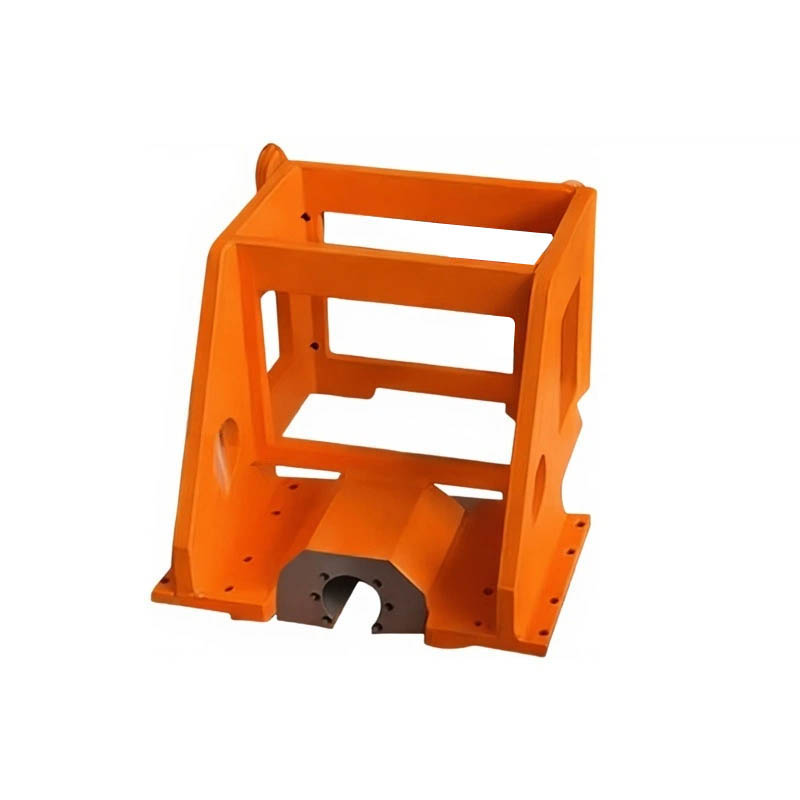
The starting point for lightweighting is a precise understanding of the stress environment. Engineers use finite element analysis software to model the loads on metal welding parts during actual operation and combine this with topology optimization algorithms to automatically identify "unnecessary material areas." For example, after optimization, the base support of a robot forms a biomimetic mesh structure internally, eliminating 30% of redundant metal, while maintaining continuity in key stress paths. The overall rigidity even slightly improves due to a more uniform stress distribution. This data-driven design approach ensures that weight reduction does not come at the expense of functionality.
2. Efficient Combination of Hollow Sections and Reinforcing Ribs
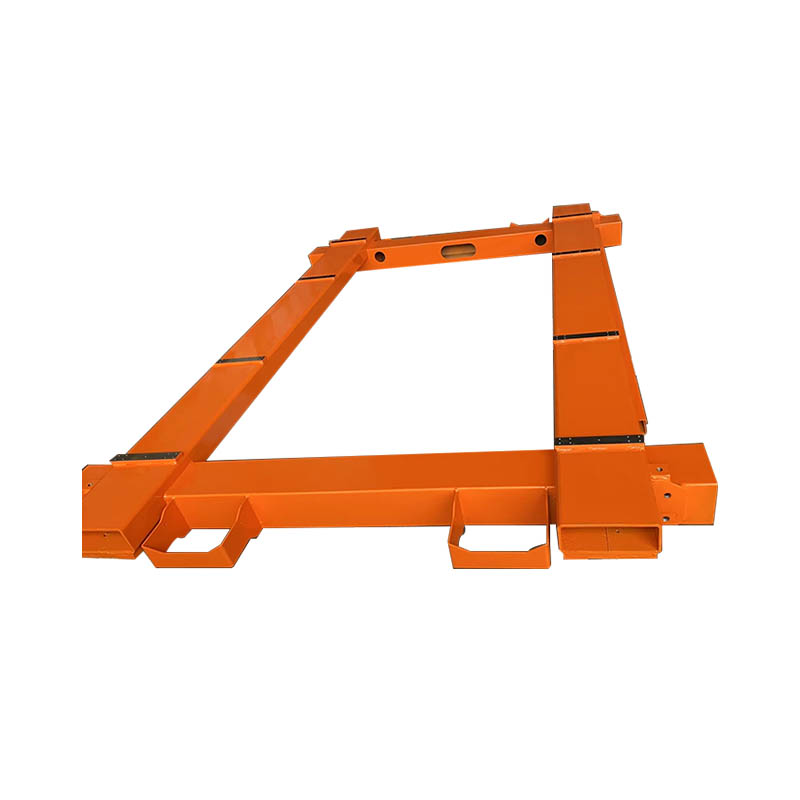
In automotive automation equipment, frame structures made of hollow profiles such as square and rectangular tubes are widely used. Compared to solid plates, hollow sections have higher bending and torsional moments of inertia for the same weight. Based on this, thin-walled reinforcing ribs or locally thickened ribs in high-stress areas can effectively suppress local buckling and deformation. For example, positioning brackets on conveyor lines often use closed box-shaped welded bodies with internal cross ribs, which reduces weight while significantly improving vibration resistance and ensuring assembly accuracy.
3. Application of High-Strength Steel and Plate Thickness Optimization
While traditional Q235 carbon steel is low-cost, its strength is limited. Lightweight design generally shifts towards high-strength low-alloy steel, whose yield strength can be 2-3 times that of ordinary steel. This means that under the same load-bearing requirements, the plate thickness can be significantly reduced. For example, replacing the original 8mm thick support plate with 6mm high-strength steel reduces weight by 25%, while maintaining stiffness through structural reinforcement. Simultaneously, the excellent weldability of high-strength steel ensures joint reliability, suitable for the stringent consistency requirements of automated production lines.
4. Integrated Welding Reduces Connection Redundancy
Traditional metal welding parts designs often assemble multiple small parts using bolts, increasing not only the number and weight of parts but also introducing assembly gaps and the risk of loosening. The lightweight trend drives functional integration design: integrating previously scattered mounting bases, guide rails, sensor brackets, etc., into a single welded assembly. This not only eliminates connectors and machining holes but also eliminates stiffness fluctuations caused by changes in bolt preload, making it particularly suitable for automated units with high-frequency reciprocating motion, such as welding torch slides or gripper arm bases.
5. Process Collaboration: Closed-Loop Control from Design to Manufacturing
The success of lightweight design relies heavily on advanced manufacturing processes. Laser cutting ensures precise contours, reducing subsequent finishing; robotic automated welding guarantees weld consistency, avoiding deformation and defects inherent in manual welding; post-weld stress relief further improves dimensional stability. Furthermore, rigorous online testing ensures that lightweight components, while reducing weight, fully meet the ±0.1mm assembly requirements of automated equipment in terms of geometric accuracy and rigidity.
In summary, lightweighting of metal welding parts within automotive automated equipment is not simply a matter of "subtraction," but rather a systematic engineering project integrating simulation-driven design, the application of high-strength materials, improved structural efficiency, and intelligent manufacturing processes. While reducing equipment inertia, improving dynamic response, and saving energy, it firmly maintains the bottom line of rigidity and reliability, providing solid support for the efficient, precise, and sustainable operation of smart factories.
1. Topology Optimization Design Based on Working Condition Simulation
The starting point for lightweighting is a precise understanding of the stress environment. Engineers use finite element analysis software to model the loads on metal welding parts during actual operation and combine this with topology optimization algorithms to automatically identify "unnecessary material areas." For example, after optimization, the base support of a robot forms a biomimetic mesh structure internally, eliminating 30% of redundant metal, while maintaining continuity in key stress paths. The overall rigidity even slightly improves due to a more uniform stress distribution. This data-driven design approach ensures that weight reduction does not come at the expense of functionality.
2. Efficient Combination of Hollow Sections and Reinforcing Ribs
In automotive automation equipment, frame structures made of hollow profiles such as square and rectangular tubes are widely used. Compared to solid plates, hollow sections have higher bending and torsional moments of inertia for the same weight. Based on this, thin-walled reinforcing ribs or locally thickened ribs in high-stress areas can effectively suppress local buckling and deformation. For example, positioning brackets on conveyor lines often use closed box-shaped welded bodies with internal cross ribs, which reduces weight while significantly improving vibration resistance and ensuring assembly accuracy.
3. Application of High-Strength Steel and Plate Thickness Optimization
While traditional Q235 carbon steel is low-cost, its strength is limited. Lightweight design generally shifts towards high-strength low-alloy steel, whose yield strength can be 2-3 times that of ordinary steel. This means that under the same load-bearing requirements, the plate thickness can be significantly reduced. For example, replacing the original 8mm thick support plate with 6mm high-strength steel reduces weight by 25%, while maintaining stiffness through structural reinforcement. Simultaneously, the excellent weldability of high-strength steel ensures joint reliability, suitable for the stringent consistency requirements of automated production lines.
4. Integrated Welding Reduces Connection Redundancy
Traditional metal welding parts designs often assemble multiple small parts using bolts, increasing not only the number and weight of parts but also introducing assembly gaps and the risk of loosening. The lightweight trend drives functional integration design: integrating previously scattered mounting bases, guide rails, sensor brackets, etc., into a single welded assembly. This not only eliminates connectors and machining holes but also eliminates stiffness fluctuations caused by changes in bolt preload, making it particularly suitable for automated units with high-frequency reciprocating motion, such as welding torch slides or gripper arm bases.
5. Process Collaboration: Closed-Loop Control from Design to Manufacturing
The success of lightweight design relies heavily on advanced manufacturing processes. Laser cutting ensures precise contours, reducing subsequent finishing; robotic automated welding guarantees weld consistency, avoiding deformation and defects inherent in manual welding; post-weld stress relief further improves dimensional stability. Furthermore, rigorous online testing ensures that lightweight components, while reducing weight, fully meet the ±0.1mm assembly requirements of automated equipment in terms of geometric accuracy and rigidity.
In summary, lightweighting of metal welding parts within automotive automated equipment is not simply a matter of "subtraction," but rather a systematic engineering project integrating simulation-driven design, the application of high-strength materials, improved structural efficiency, and intelligent manufacturing processes. While reducing equipment inertia, improving dynamic response, and saving energy, it firmly maintains the bottom line of rigidity and reliability, providing solid support for the efficient, precise, and sustainable operation of smart factories.